
Summer is with us and the temperature is increasing year on year. As a song from the 60s states 'There is something in the air' and it is definitely getting hotter.
It must surely be wise to be prepared with approaching new weather patterns. There are plans to build on The River Thames estuary floodplain with unknown circumstances to the area.
More of our precious nature will be challenged to survive. We do not know not the likely outcome, so pressing on regardless would seem foolish, considering the consequences could be more than problematic.
If you value having someone campaign on your behalf to protect the environment and having access to useful articles about gardening and local environmental matters, please make a donation to help us with the cost of maintaining The East London Garden Society.
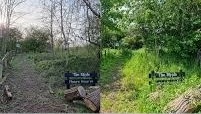
The Ripple Nature Reserve covers about 10.1 hectares has been closed for four years with no access.
Set among the industrial landscape of Barking Riverside and once a dumping area for pulverised fuel ash, it's a fascinating example of how nature can reclaim industrial wasteland.
The reserve is a tapestry of birch woodland, scrub and grassland. The dumping of fuel ash has created a soil that is very alkaline and therefore different to most soils in London which are mostly acidic.
This means that many plant species that can tolerate the soils of The Ripple struggle to grow elsewhere. Pyramidal and southern marsh orchids, grey club rush and wild basil are the most important of these. The areas of meadow and scrub provide a suitable habitat for six red data book species (those that are considered on the edge of extinction) of invertebrates.
The development of the surrounding land has seen quite a few animals disappear from the site; grey partridge and water vole, for example. Those species that are left are fairly typical of urban nature reserves though perhaps the number of rabbits and flocks of goldfinches are notable. The site is managed by the borough's Parks and Countryside Ranger Service.
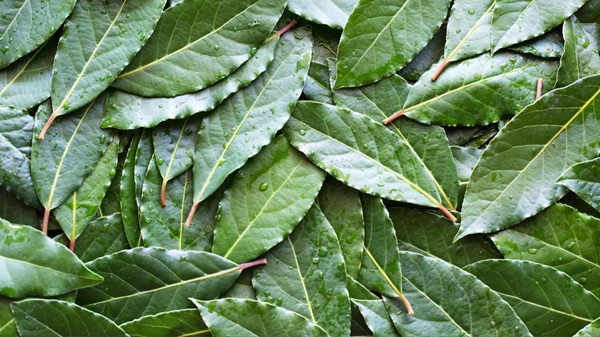
Bay leaves (Laurus nobilis L.) have been a staple in traditional medicine and cooking for centuries, but modern research now reveals something far more important about this common herb. Studies show that bay leaves significantly lower blood sugar levels and improve cholesterol, making them a powerful tool for managing your metabolic health.
They also contain beneficial compounds that help protect cells from oxidative stress, which is one of the key drivers of inflammation and chronic disease. This ability to support both glucose metabolism and lipid balance makes them an overlooked but valuable addition to a health-conscious diet.
Bay leaves are an excellent source of vitamins A and C, iron, manganese, copper, and calcium. All of these are antioxidants with free radical-scavenging abilities, and positively impact your eyesight, bones, blood and more.
Other health benefits:
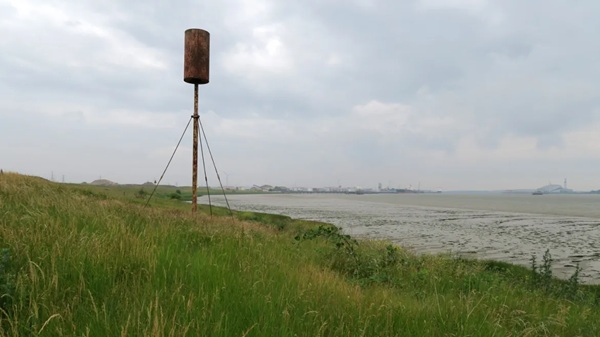
There is a constant reminder of flooding occurring in the UK, prominently in the west and north west, with the river Severn and Avon. Original flood defences were contrived, which have now twice been enlarged, and many properties are now uninsurable alongside these rivers owing to the annual onslaught. These flood risks are notably from torrential rain over a given short period of time.
A greater risk of inherent damage is from the sea, with storm surges. It is supposed that the greatest storm surge was when the land bridge to Europe was lost, but the one within living memory must have been The Great Flood of 1953. The 1953 flood was the causal effect of The Thames Barrier.
After a visit to The Thames Barrier to understand the mechanisms, it was mentioned that another Thames Barrier would have to be constructed for fear of greater storm surges up The River Thames from The North Sea.
The last time we had such temperatures in May was 1944, however the temperature this year breached that landmark, indeed the temperatures have been rising consistently year on year. These are primarily caused by the melting poles and the raising of sea levels.
When temperatures become increasingly high year on year, more evaporation will happen from the oceans, and inevitably larger clouds will form increasing the capacity of water, which will in turn create larger storms, ending in weather patterns not seen before. 2026 is said to be the year of the supercharged el nino. No organisation or political authority understands what this will mean.
Raising the flood defences to have a conurbation of 60,000 homes built on a floodplain is not a sure way of ensuring the weather will not be inclement enough to breach the defences, especially where storm surges are concerned. Maybe a better floodplain analogy would be to place King Canute along the Barking river bank.
There are expectations of larger weather patterns influencing Barking and its surrounding boroughs. The very least The Thames Barrier concerns should be looked at by all the boroughs along The River Thames Estuary.
There is of course data which can be found, but this is a layman's explanation about the way the weather is advancing inexorably to a greater disadvantage to humanity. It will not excuse Barking & Dagenham placing restrictions on water flow patterns.
Read More
The East London Garden Society organised another boat trip up The River Lea to celebrate 'Save The Lea Marshes' and 'London Rivers Week'. We sailed on a lovely warm day in May.
It is certainly tranquil when taking a four hour boat trip through the nature of London's second largest river, its bird life, and the verdant green in all its lushness.
Despite some glitches, due to a change of boarding point owing to the non availability of docking at Three Mills, once aboard people were very pleased to be navigating The River Lea. During the trip we showed videos, plus a presentation of our new The Great Eastern Park Route App.
We thank The Lea Rowing Club, with a special thanks to Beth for allowing us to interrupt their day and join their festivities of The River Lea.
On the return journey, Mark the boatman gave us a real treat by going through the back rivers of Stratford. As passenger said "it looks like the Amazon" as a strong smell of wild garlic infused the air. It all seemed so perfect.
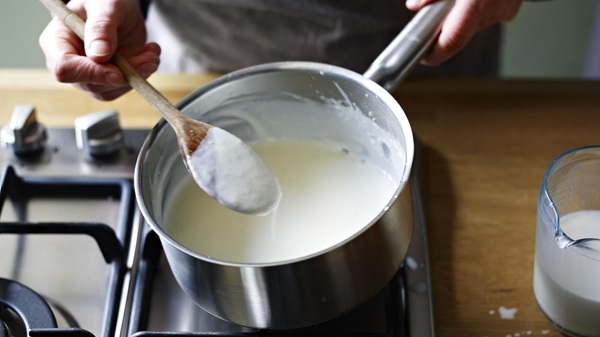
The flavouring in the milk makes the sauce very aromatic and distinguishes it sauce from a plain white sauce, which might have cheese or other flavourings added to it.
To keep the sauce warm, pour it into a warmed jug and cover the surface with clingfilm to stop a skin from forming, then place the jug in a pan of barely simmering water.
If you find lumps in your sauce, it's probably because you've added too much milk too early. To fix it, remove the sauce from the heat and whisk vigorously until the lumps are gone. Return to the heat and continue adding the milk as per the recipe. Don't be tempted to add more milk to a lumpy sauce, it only makes it harder to remove the lumps. You can also pass the lumpy sauce through a fine sieve.
To make a gluten-free béchamel sauce, use a gluten-free plain flour blend but increase the amount of flour to 40g.
To make the sauce dairy free, you can use a non-dairy milk and butter, but it will change the flavour. For best results, a vegan butter is recommended which is sold in blocks and a neutral tasting non-dairy milk such as soy milk.
Béchamel sauce freezes well in an air-tight container and can be stored for up to two months. Defrost overnight in the fridge or partly defrost at room temperature for a couple of hours before reheating. Bring to a gentle simmer in a large saucepan, or reheat in the microwave, until piping hot. You’ll need to add an extra splash of water or milk when you reheat the sauce and make sure you whisk regularly to prevent any lumps.

From Shoreditch High Street Station to the RSPB sanctuary at Purfleet, the Great Eastern Park Route takes you north along the River Lea towards Ware in Hertfordshire.
Using this new App will help you discover special nature reserves, historical buildings, and community spots all of which are accessible by boat, walking, or cycling.