We combine the January and February issues of The Voice each year as all of us are volunteers on the same path to obtain a better environment in east London for all to enjoy. We like our volunteers to have rest for the festive period and thank them for their hard work.
However, we look forward with vigour to deal with the challenges that confront us in 2026. One particular experience I enjoy is judging at The London Children's Flower Society. It shows that children are being taught in school the value of the nature in our world.
My first year judging was in 2025, and the schools I judged were not only showing how to grow vegetables for the table, but learning about the wide range of biodiversity to be found by having natural environments as class lessons. Long may it last.
The East London Garden Society is the only group with a clear remit for the total urban environment in east London, so we look forward to continuing that in 2026.
To do so requires money, so If you value having someone campaign on your behalf to protect the environment and having access to useful articles about gardening and local environmental matters, please make a donation, however small, to help us with the cost of maintaining The East London Garden Society. Thank you.

It is around this time of year that The East London Garden Society reviews our achievements during the past year, and where we wish to go in 2026. Our feeling is that we should build on what we were able to achieve in 2025.
We discussed having an App for The Great Eastern Parks Route, to involve all the communities in east London in a discussion about the wonderful nature/historic trails we find in this part of London. Our aim is that all should be able to enjoy the environment in their own special way. We hope to launch the App with London Walking Week and London Rivers Week, toward the end of May 2026.
The East London Garden Society is involved in the promotion of a garden competition in Waltham Forest from which people's interpretation of their own special part of the East London environment will be collected. We hope to have prizes for the best ideas.
The East London Garden Society is planning with others to have a boat trip during London Rivers Week. We wish to provide a free trip to those who would not ordinarily take a second look at what is on their doorstep. In 2025 we had a successful dry run boat trip, so hope to make this a regular feature, to assist a better understanding of the rivers, parks, gardens, canals etc in east London.
We also welcome people or groups who are eager to protect our environment, since as one, the challenge becomes more realisable. I am pleased that we have a voice to be able to challenge authority on the values of our urban environment.
If you value having someone campaign on your behalf to protect the environment and having access to useful articles about gardening and local environmental matters, please make a donation to help us with the cost of maintaining The East London Garden Society.
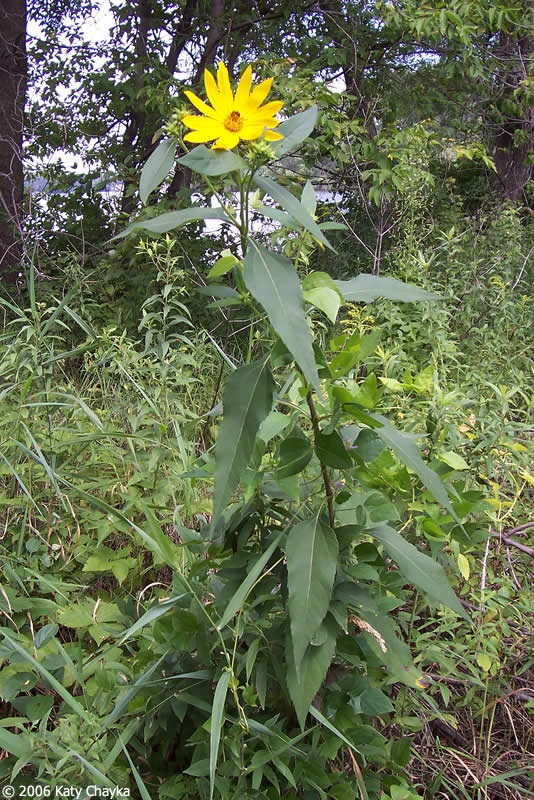
The Jerusalem artichoke (sunchoke) originated in North America, cultivated by Indigenous peoples, and was brought to Europe by French explorer Samuel de Champlain around 1605, becoming popular for its nutty, artichoke-like taste.
Its name stems from a corruption of the Italian girasole (sunflower), to which it's related, combined with the similar flavor to globe artichokes, despite having no relation to either. It was a common food in Europe by the mid-1600s but gained notoriety in the 1980s as an energy crop, though with mixed financial success.
The plant thrived in European climates, quickly becoming a common vegetable and livestock feed by the mid-17th century. The French developed a particular fondness for it, with its peak popularity around the turn of the 19th century.
Resembling a large piece of ginger, Jerusalem artichokes are rich in inulin, a type of prebiotic fibre that feeds beneficial bacteria in our bodies, which protects our health. They are also high in iron, potassium, and vitamin C, and contain 3 grams of protein per sliced cup.
Artichokes have demonstrated hepatoprotective effects in research, suggesting their potential in protecting the liver and supporting its overall health. It can also help reduce non-alcoholic fatty liver disease and possibly help liver cells regenerate.
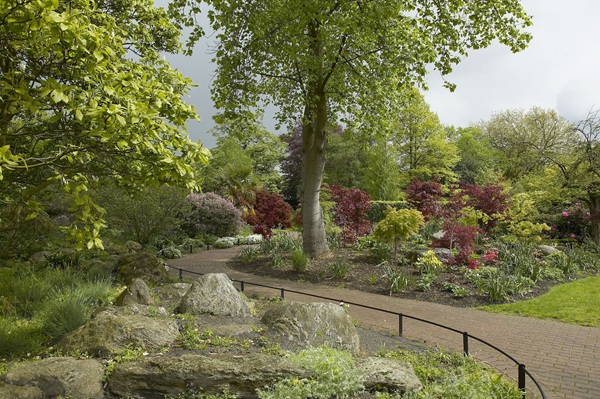
At Bethnal Green Gardens we are at the second oldest garden in London given to the people of east London in the reign of Charles ll.
We can follow the London Highline route to Meath Gardens, where there is a garden with history. Meath Gardens (formerly the privately-owned Victoria Park Cemetery) was founded in 1842. It closed to burials in 1876 having fallen into disuse and only a few gravestones remain today.
The gardens were opened in 1894 by the Duke of York. They were renamed Meath Gardens after the Metropolitan Public Gardens Association's Chairman, the Earl of Meath.
Leaving Meath Gardens we go toward the Regents Canal. Going south we will walk through Mile End Park with its attractions, and further down we may visit The Ragged School Museum. This museum is in the London Borough of Tower Hamlets. It was opened in 1990 in the premises of the former Dr Barnardo's Copperfield Road Ragged School.
The school opened in 1877 to serve the children of Mile End with a basic education. It was the largest of its kind at the time. Travelling towards The Limehouse Basin, and the River Thames, we find Ropemakers Fields given to the borough after The Limehouse Link Road was built.
From Meath Gardens we can go North to Victoria Park. This is a park in the London Borough of Tower Hamlets. It is the largest park in Tower Hamlets and one of London's most visited green spaces with approximately 9 million visitors each year.
The park spans 86.2 hectares of open space and was opened to the public in 1845. We turn onto the Hertford Canal, and reach the River Lea. From here we enter the boundaries of The Queen Elizabeth Olympic Park, following the River Lea southbound to Three Mills.
It is thought that there were eight or possibly nine mills on the River Lea in Stratford at the time of the Domesday Book, though this number may refer to the number of pairs of millstones rather than buildings. These are the earliest recorded examples of a tidal mill system. In the clock mill there were 16 workers.
Stratford Langthorne Abbey, founded in 1135, acquired Three Mills at some time in the 12th or 13th centuries, and the local area became known by the name. By the time Henry VIII dissolved the abbey in the 1530s, the mills were grinding flour for the bakers of Stratford-at-Bow, who were celebrated for the quality of their bread and who supplied the huge City of London market.
In 1588, one of the mills was described as a gunpowder mill. During the 16th century the three mills were reduced to two (which today are the House Mill and the Clock Mill). In the 17th century, the mills were used to grind grain, which was then used to distil alcohol. The mills became a major supplier to the alcohol trade and gin palaces of London. Peter Lefebure began distilling gin at Three Mills in about 1730.
The House Mill was built in 1776, and after a fire destroyed it was quickly rebuilt, by Daniel Bisson. It is a grade I listed building. The Clock Mill was rebuilt by Philip Metcalfe between 1815 and 1817 incorporating the old clock, and an older bell. There was also a windmill which survived until about 1840. The House Mill continued to operate until 1940 and the Clock Mill until 1952.
Ownership changed relatively frequently during the 17th to the late 19th centuries, until 1872 when it was purchased by gin distillers J&W Nicholson & Co of Clerkenwell. Initially producing Lamplighter Gin on site, the company eventually moved production of all of their brands to the site. Distilling ceased in 1941 during the rationing shortages of World War II. The Nicholson family, headed by Sir Richard Nicholson, sold the business to the Distillers Company.
At Three Mills we turn left to the lost river The Channelsea, a river that is a hidden tidal creek in East London. Here you can discover a secret island and an oasis for urban wildlife!
The Channelsea is one of the Bow Back Rivers, a series of man-made channels which date back to the 12th century. They were dug to drain the Stratford Marshes, now long gone and buried beneath layers of urban expansion.
Much of the Channelsea has been filled in and built over, but a stretch still survives. This hidden waterway is just a few hundred metres from West Ham Underground Station, but few know about it, or visit.
After visiting The Channelsea River we walk toward The Greenway which with several surrounding areas have been recognised by the Mayor of London and the London boroughs as a Site of Importance for Nature Conservation since 2016.
Just as we enter The Greenway, we stop to visit West Ham Church. All Saints, West Ham is in the heart of Newham, and Christian worship has thrived here since 1130. West Ham Church has been part of SAINT since September 2020.
Thereafter, our destination is West ham Park in the City of London , one of the most spectacular parks in East London.
West Ham Park was opened to the public in 1874. It is a green oasis of 77 acres in the heart of Newham with a typical Victorian layout of avenues of, mostly, Plane trees. As you look around, you will also see evidence of the modern wildlife friendly management style which has been used in recent years. Look out for areas of long grass with wildflowers, where a minimal mowing policy is in place.
Around the mounds, which are relics of a long-gone mini golf course, there are areas planted with spring bulbs, flowering shrubs and herbaceous plants to encourage pollinating insects. The park also has areas set aside for outdoor education led by the park’s own learning team, which are enormously popular with local schools.
For a touch of culture, walk into the seven acre ornamental garden and learn about the botanical and social history of the park in the permanent exhibition in the rose garden. This is one of many projects led by the Friends of West Ham Park, who also run the Community Vegetable Garden, close to the main gate on Upton Lane, and hold a programme of events throughout the year to encourage community involvement and contact with nature.
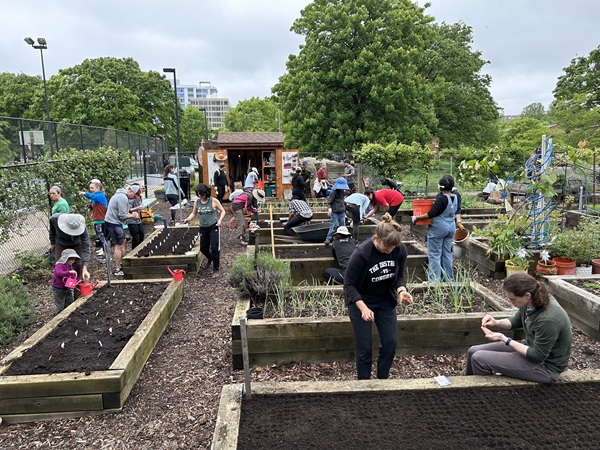
UK residents have relied on community gardens as an important source of food for hundreds of years. During the Second World War, for example, community allotments were set up on inner-city sites to provide affordable fresh fruit and vegetables to the local area.
From tiny vegetable plots to large leisure parks, community-managed projects are often created in response to a lack of available green space.
Community gardens often bring different cultures and generations together, improving individual and community confidence and bridging the divide between ethnic, political and socio-economic groups. One success story is Bolney Court in Crawley, Surrey where residents turned an overgrown, littered space into a beautiful flower garden.
As part of the Let's Face It and the RHS South East in Bloom campaigns, volunteer residents were able to get the support they needed to clear 3.7 tonnes of rubbish from the area.
One long-term resident of Bolney Court believes the garden has had a massive impact on the community. "I've lived here for ten years and I didn't really know anyone before we started the work, now we are all friends. We've created a type of village life where everyone looks out for each other." Once intimidated by gangs in the area, residents can now enjoy an attractive and secure environment.
Providing open space, a place to grow organic food, and healing centres for people with mental and physical disabilities, as well as creating opportunities for recreation, exercise, therapy and education, community gardens are an immensely valuable resource to neighbourhoods across the country.
If you don't have a garden of your own and want to get involved in your local community, try joining a neighbourhood greening project.
Have you ever wondered what to do with Jerusalem Artichokes? This recipe makes a wonderful side dish and alternative for roast potatoes.
Preparation time: 5 minutes plus 1 hour soaking.
Cooking time: 40-45 minutes.
Preheat oven to 180C/350F fan forced. Drain the Jerusalem Artichokes, trim any eyes (if any) and halve the large ones lengthways (you want them to end up around the same size).
Coat in oil and place the cut ones cut side down. Roast for 40 minutes or until soft to the touch. Season with salt and pepper to taste and scatter fresh rosemary on top.